The music competes with the dishwasher
You sit down with a familiar album and turn it up to get past the noise in the next room. Buying a more elaborate pair of headphones may seem like the obvious improvement. First listen with the music paused. The room is part of the system, and some headphone designs deliberately let it remain audible.
For an evening at a quiet desk, that openness may be welcome. On a train or beside a working appliance, it can become a distraction. Start with where you listen, how long you stay there and who shares the space.
Open backs have a particular job
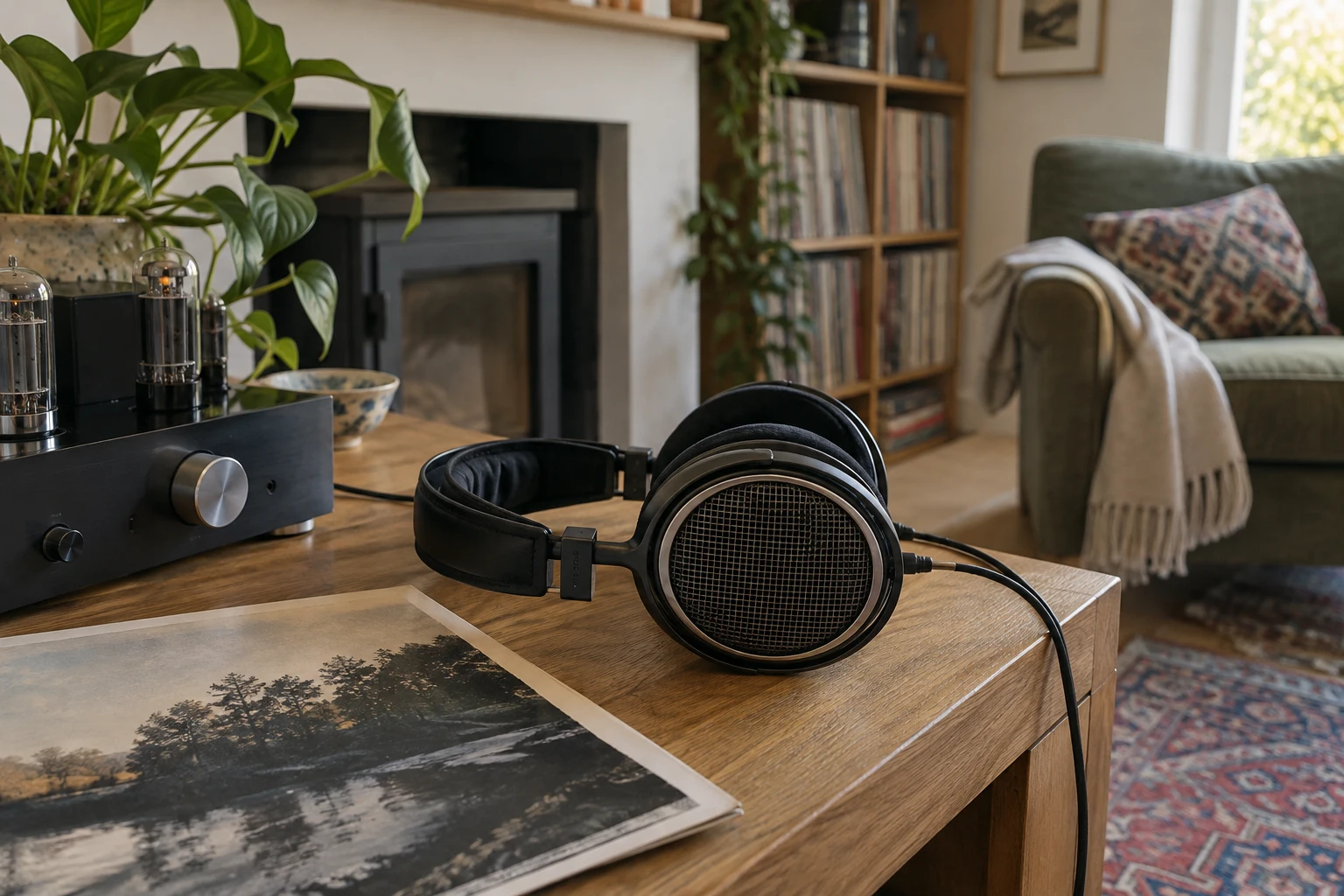
An open-back design allows sound to pass through the earcup rather than sealing it away. That means people nearby may hear your music, while you may hear them. It is a practical limitation to settle before debating fine differences in sound.
A shared bedroom, a late-night television or a busy office can therefore rule out a model that suits a private sitting room. Do not solve the wrong problem by raising the volume. Change the listening conditions or consider a design intended for greater isolation.
Check the whole connection
Trace the route from the music to your ears. Is it a laptop socket, a separate amplifier or a phone without an analogue output? A plug adaptor can change the connector without providing all the drive a particular headphone needs. Ask about the actual source and model together.
Comfort deserves the same attention. A short audition will tell you little about pressure after a long album. Notice headband fit, ear clearance, cable movement and whether glasses disturb the seal or position.
Those details remain present every minute you listen.
Make a useful comparison
Take a few familiar recordings with voices, quieter passages and the sort of music you actually enjoy. Compare at a comfortable, broadly similar level. Louder can sound more impressive for a moment without being the better long-term choice. Avoid judging solely from a dramatic demonstration track.
Try moving your head and reaching for the keyboard. Check whether the cable catches and whether the listening position feels natural. If you cannot audition in person, read the seller’s return conditions carefully before relying on a home trial.
Where the HD 600 belongs
Richer Sounds lists the Sennheiser HD 600 as an open-back, over-ear wired headphone. That is a specific kind of offer: a home listening component rather than a wireless travel accessory. Discuss source compatibility with the retailer and compare the complete setup cost if you need additional equipment.
The product page is the place to confirm the current package, connectors and sales terms. Our interest is the fit between a quiet listening space and that design. Listen with familiar recordings and check the source you intend to use before choosing; personal comfort and listening preferences still matter.
Buy for the evening you will repeat
A sensible choice makes a familiar routine more comfortable. If you have a quiet room, a suitable source and time to listen, an open-back pair can earn a place there. If your evenings happen around other people and household noise, answer those constraints first.
Keep the volume comfortable and allow breaks during long sessions. The aim is to hear more of an album you enjoy, not to turn listening into a contest between specifications. A well-matched modest setup is easier to live with than an impressive component solving the wrong problem.
Common questions
Are these noise-cancelling headphones?
The linked HD 600 is an open-back wired model, not a noise-cancelling travel headphone.
Will other people hear them?
Open-back designs can leak sound; consider shared spaces.
Do I need another amplifier?
It depends on the source. Ask the retailer about your exact equipment.
Sources and disclosure
Sources checked: 2026-10-16
Advertising article. A commercial link leads to the named seller; a commission is possible only if a referral agreement covers it. The seller handles the offer.