Cloud clears just as the evening ends
You notice the Moon between the houses and carry a telescope outside. The finder points somewhere else, the table rocks and every touch sends the image trembling. The sky has supplied the opportunity; the equipment routine has used it up.
A first telescope should be easy enough to set up that you actually use short clear spells. Storage, carrying and a stable place to observe matter as much as the size of the optical tube. Think through the route from cupboard to garden before choosing.
Magnification is only one part
A large number on the box is not a promise of a sharp view. The atmosphere, stability, optics and the object itself all affect what you see. Start with a low-power eyepiece so the field is easier to navigate, then increase magnification only when the view supports it.
Expect a live view rather than the coloured, processed photographs you see online. Looking carefully and returning to the same object can reveal more than buying accessories immediately. A short session with one recognisable target is a good beginning.
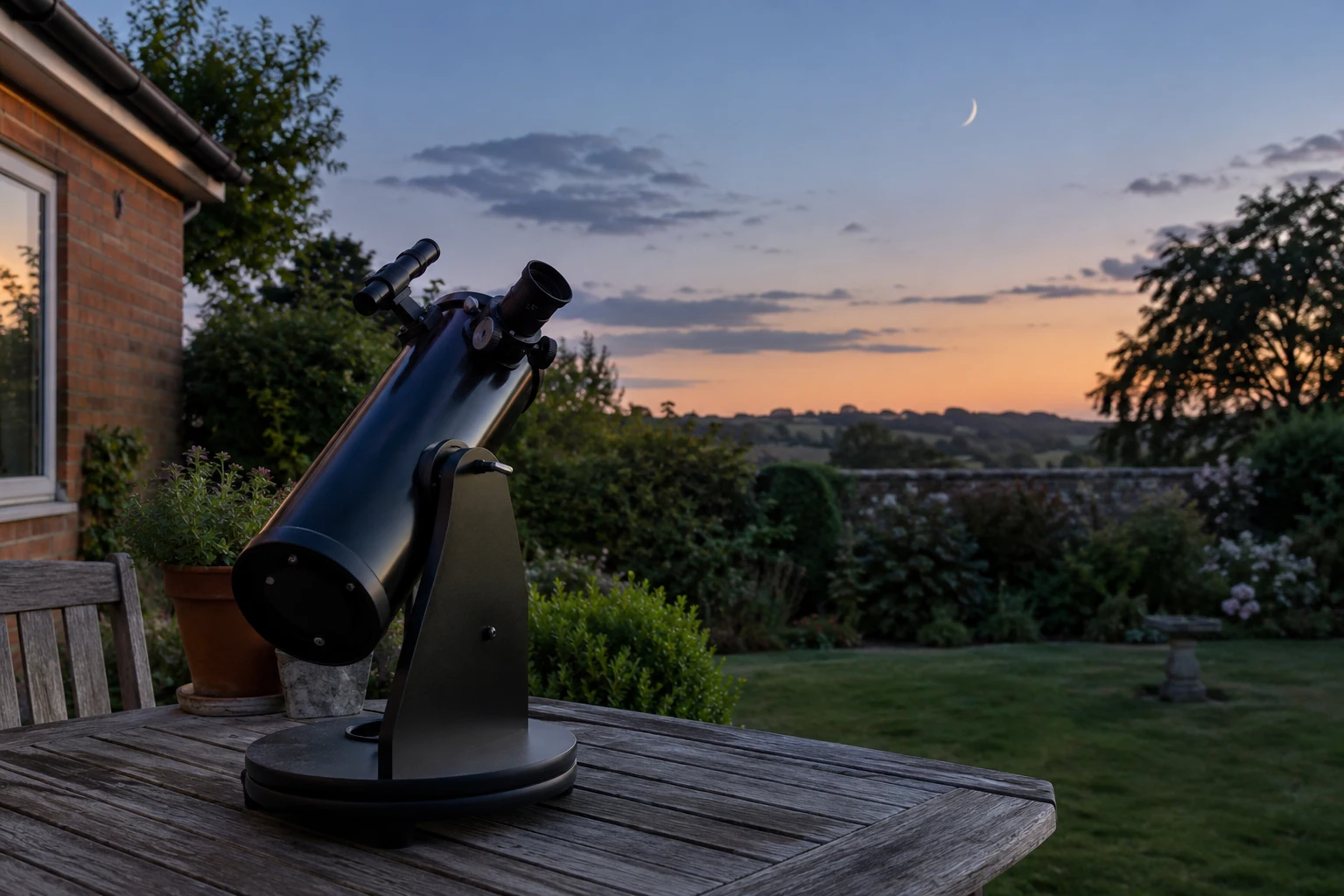
A tabletop design needs a table
Compact does not mean independent of its surroundings. A tabletop telescope needs a firm support at a usable height. A folding table that flexes when you lean on it can make focusing frustrating. Check how you will sit or stand at the eyepiece as the telescope points higher.
Also look at storage dimensions and carrying weight. A collapsible tube can help with space, but you still have to move the base and keep the equipment clean.
Avoid leaving the instrument where someone might accidentally point it towards the Sun.
Practise the ordinary movements
Read the manual and assemble the telescope in daylight. Learn the finder and focusing controls on a safe distant terrestrial object, never the Sun or its vicinity. Once outside at night, begin with an easy target and small, deliberate movements. Let the view settle before deciding it is out of focus.
Keep a dim light for finding equipment and leave eyepiece caps in one place. A simple note of the date, target and conditions helps you recognise progress. Ask an astronomy club for practical help if alignment or collimation remains confusing.
What the Heritage 130P offers
First Light Optics lists the Heritage 130P as a tabletop reflector with a 130 mm primary mirror, a collapsible tube and a manually moved Dobsonian mount. The listing describes supplied eyepieces and a finder. Those features fit a hands-on introduction in which the observer learns to locate and follow objects.
Check current availability before planning a gift or trip around delivery. The compact arrangement also makes the support surface part of your budget. It is not automatically a ready-made system for long-exposure astrophotography; that is a different set of requirements.
Choose a target, then choose a telescope
Picture the first session you want: finding the Moon from the garden, showing a family member a planet or learning the brighter objects from a darker site. Let that session define the practical purchase. You may learn enough with borrowed binoculars or a club visit to make a better choice later.
The best first clear night ends with something seen and a reason to go outside again. A steady support and familiar controls make that result more likely than chasing the highest advertised magnification.
Common questions
Can I look at the Sun?
Never point an ordinary telescope at the Sun. Solar observation requires specialist equipment and expert guidance.
Does it need a support surface?
Yes. The linked model is a tabletop telescope.
Will the view resemble processed space photographs?
Usually not. Visual observing and long-exposure imaging produce different experiences.
Sources and disclosure
Sources checked: 2026-10-16
Advertising article. A commercial link leads to the named seller; a commission is possible only if a referral agreement covers it. The seller handles the offer.